
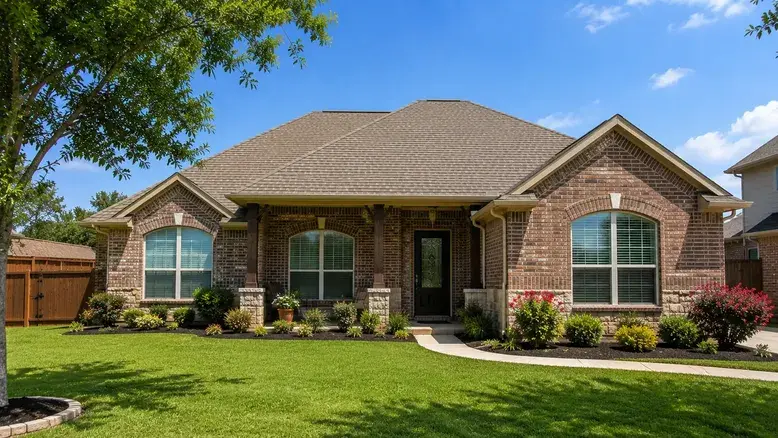
Your home needs a roofing system that can handle intense heat, high humidity, heavy rainfall, strong winds, and sudden changes in Texas weather. Houston Roofing & Improvements provides Residential Roofing Houston TX homeowners can rely on for inspections, repairs, leak solutions, replacements, installations, maintenance, and complete roofing-system care.
We work with homeowners across Houston and surrounding communities, including Katy, Pearland, Sugar Land, League City, Spring, The Woodlands, Baytown, Galveston, Alvin, Kemah, Rosenberg, Angleton, La Porte, Beaumont, and nearby areas.
Every roof has a different condition, design, and service history. That is why we do not begin with a predetermined recommendation. We assess the roof, explain what we find, and help the homeowner understand the most practical next step.
A roof is more than the visible material installed on top of a house. It is a complete system made up of decking, underlayment, flashing, ventilation, valleys, shingles or metal panels, fasteners, sealants, and drainage details. If one component is installed incorrectly, the entire system may become vulnerable.
Our Residential Roofing Services Houston TX homeowners use are designed to address both visible problems and less obvious concerns. These may include moisture near a roof penetration, damaged shingles after high winds, poor attic airflow, deteriorated flashing, or recurring water entry during heavy rain.
Houston Roofing & Improvements approaches residential roofing as a complete system. We look at how the components work together instead of focusing only on the surface material.
Homeowners often contact us after noticing one obvious warning sign. In many cases, the underlying problem began earlier.
Watch for:
A problem that looks small from the ground may involve several connected roofing components. Early evaluation can help homeowners make a clear decision before the issue affects insulation, decking, drywall, or interior finishes.
A Home Roof Inspection provides a clear picture of the roof’s visible condition. It can help identify maintenance concerns, damaged materials, weak areas, and signs of water entry before the problem becomes more extensive.
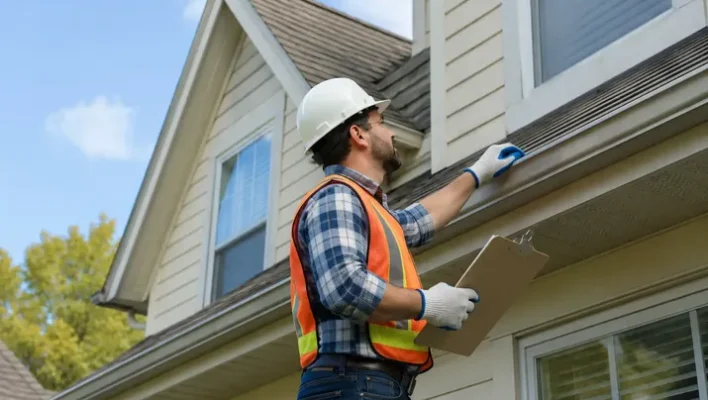
Our inspection process may include accessible exterior roofing components, shingles or metal surfaces, flashing, valleys, ventilation, pipe penetrations, sealants, visible drainage paths, and areas where different roof sections connect.
A House Roof Inspection is especially useful when:
A professional Residential Roofing Inspection should provide useful findings, not a vague sales presentation. Homeowners should understand what was observed, which areas need attention, and whether the condition calls for monitoring, maintenance, repair, or a more extensive solution.
Our Residential Roof Inspection Service focuses on clear communication. Where appropriate, we document relevant roof conditions with photographs and explain how each finding affects the roofing system. Learn more about our Roof Inspection Houston services.
A roof does not always need to be replaced when damage appears. A focused Residential Roof Repair may restore protection when the problem is limited, accessible, and repairable.
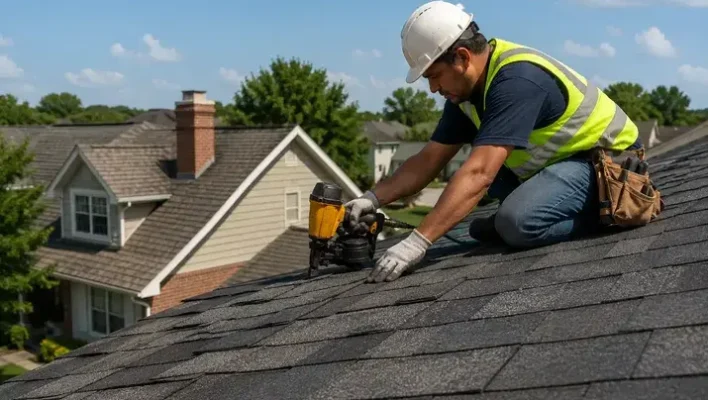
Common repair needs include loose roofing material, damaged shingles, deteriorated sealants, failed flashing, worn pipe boots, exposed fasteners, and localized damage near roof transitions.
A professional Home Roof Repair should address the source of the problem rather than simply cover the visible symptom. For example, replacing a damaged shingle may not solve water entry if the surrounding flashing or underlayment is also compromised.
Our Residential Roofing Repair Services begin with identifying the affected area and reviewing the nearby roofing components. We then explain whether a repair is likely to provide a practical result. Learn more about our Roof Repair Houston services.
Residential repair may be appropriate when:
Repairability depends on material condition, roof age, previous work, accessibility, and the extent of hidden damage. We consider these factors before making a recommendation.
Water can travel beneath roofing materials before it appears inside the home. That means the location of an interior stain may not be directly below the actual entry point.
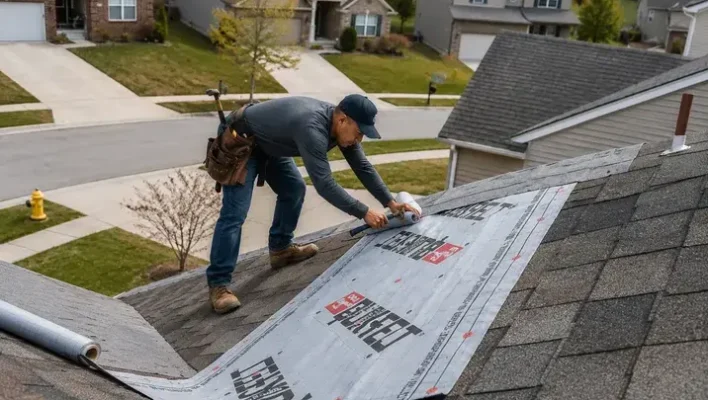
Our Residential Roof Leak Repair process focuses on identifying the likely path of water and examining the roofing details around that area.
Potential leak sources may include:
Professional Residential Roof Leak Repair Services should do more than apply sealant to the first visible gap. Sealant may be useful in the correct application, but it should not replace proper roofing work.
A House Roof Leak Repair may require removing affected material, correcting the underlying detail, installing compatible components, and restoring the surrounding roof area.
Our approach to Residential Roofing Leak Repair considers both the visible leak and the condition of nearby materials. This helps reduce the chance that another weak point is left unaddressed.
Homeowners should arrange an evaluation when they notice stains, active dripping, damp attic materials, peeling paint, or moisture around a vent or chimney. Even a slow leak can affect decking, insulation, and interior surfaces over time.
A roof replacement may become the practical option when deterioration is widespread, repairs are becoming frequent, or multiple roof sections are no longer performing reliably.
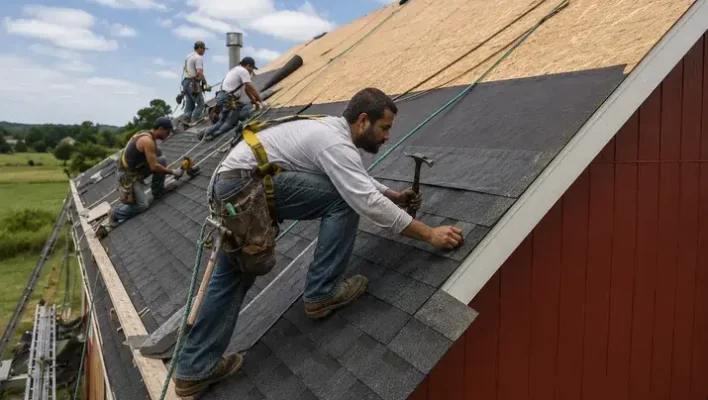
Our Residential Roof Replacement process begins with reviewing the current system. We look at the roof’s visible condition, material wear, repair history, leak patterns, roof design, and any accessible signs of underlying damage.
Professional Residential Roof Replacement Services should include more than installing a new surface. The existing roof must be evaluated as a system.
Important considerations may include:
A Home Roof Replacement should be planned around the property’s roof design, exposure, material preferences, and long-term ownership goals.
A House Roof Replacement may be appropriate when:
We explain what we find and help homeowners compare repair and replacement based on the actual roof condition. Learn more about our Roof Replacement Houston services.
A new roof installation requires careful coordination between every roofing component. The visible surface is important, but the layers beneath it also affect water protection, wind performance, ventilation, and long-term durability.
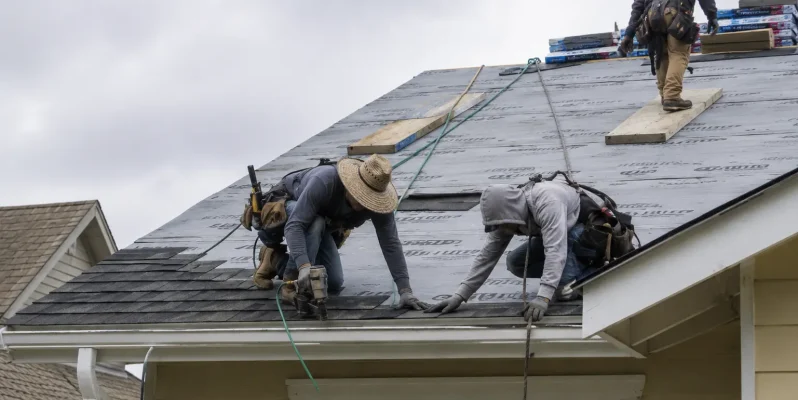
Our Residential Roof Installation approach focuses on proper system integration. This includes compatible materials, correct placement, appropriate fastening, and careful work around penetrations, valleys, ridges, edges, and transitions.
Professional Residential Roof Installation Services may be needed for:
A Home Roof Installation may include roof-deck preparation, underlayment, flashing, ventilation components, starter materials, shingles or metal panels, ridge details, and other system components appropriate for the design.
Underlayment deserves particular attention in Texas. It forms an important protective layer beneath the visible roofing material. Proper installation and material selection can help support the roofing system when wind-driven rain or surface damage exposes the layers below.
Fastening also matters. Nails or approved fasteners must be placed correctly. Improper depth, spacing, angle, or positioning can affect how roofing materials perform.
Houston Roofing & Improvements places strong emphasis on workmanship, material compatibility, manufacturer requirements, and clear project documentation.
Routine care can help homeowners identify developing concerns before they become disruptive.
Roof Maintenance Houston homeowners arrange may include visual checks, debris removal where appropriate, review of sealants, inspection of flashing, examination of roof valleys, and attention to visible drainage concerns.

Effective Roof Maintenance focuses on the areas most likely to experience wear. These often include penetrations, transitions, edges, fasteners, sealants, valleys, and locations where debris or moisture collects.
Our Roof Maintenance Services are designed to support the existing system and identify practical corrective needs.
Residential Roof Maintenance may include:
Home Roof Maintenance becomes especially important after periods of heavy rain, strong wind, or unusual weather.
Maintenance cannot prevent every roofing problem. It can, however, provide useful information and allow homeowners to respond before a small concern spreads into multiple roofing components.
Residential Asphalt Shingle Roofing remains a practical choice for many Houston-area homes. Shingles are available in different profiles, colors, styles, and product grades, allowing homeowners to balance appearance, performance, and budget.
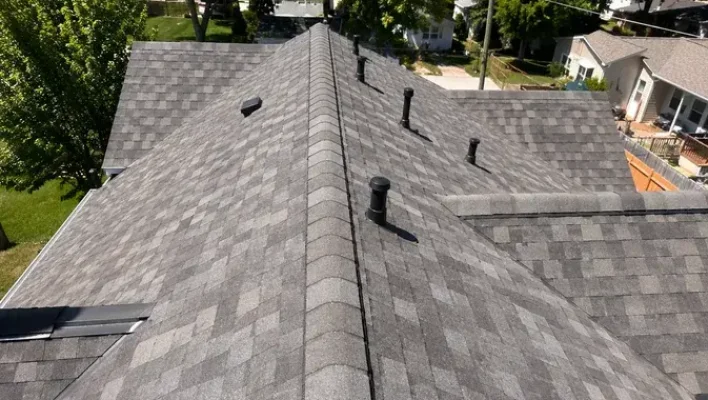
Professional Asphalt Shingle Roofing depends heavily on correct installation. Even a quality product can perform poorly when fasteners, underlayment, flashing, starter materials, or ventilation are handled incorrectly.
An Asphalt Shingle Roof should function as part of a complete system.
Our Asphalt Shingle Roof Services consider:
Proper Asphalt Shingle Roofing Installation requires attention to alignment, exposure, fastening zones, edges, penetrations, and roof transitions.
Architectural and dimensional shingle styles are commonly selected for residential properties because they provide a more defined appearance than basic flat-profile products. Product selection should also consider the home’s design, exposure, maintenance needs, and homeowner expectations.
Houston heat, humidity, strong sunlight, heavy rainfall, and wind can place continuous stress on a shingle system. Installation quality and ventilation can influence how the roof responds to those conditions.
Metal Roofing can provide a durable residential option for homeowners who want a distinctive appearance and a system designed for long-term use.
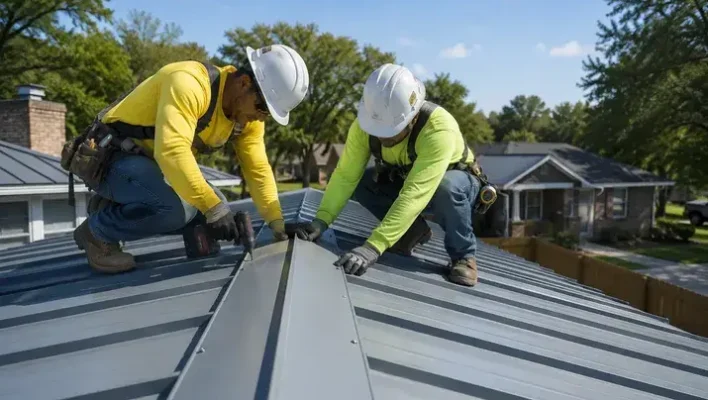
A Residential Metal Roof Installation requires precise planning. Panels, seams, trim, flashing, fasteners, underlayment, roof penetrations, and transitions must work together.
Our Metal Roofing Services consider the roof’s design, slope, structural details, property style, and homeowner goals.
A professional Metal Roof Installation may offer:
Residential Metal Roofing typically requires a higher initial investment than many shingle systems. Homeowners should compare product type, installation method, maintenance expectations, roof complexity, and long-term ownership plans.
Metal does not eliminate the need for proper underlayment, flashing, ventilation, or workmanship. Panel attachment, seam design, expansion details, and penetration work remain essential.
Houston Roofing & Improvements evaluates whether metal roofing suits the property rather than recommending it for every home.
Proper Roof Ventilation helps manage heat and moisture movement through the attic area.
A roofing system may experience additional stress when hot, humid air remains trapped beneath the roof deck. Poor airflow can contribute to high attic temperatures, moisture accumulation, and uneven conditions beneath the roofing material.
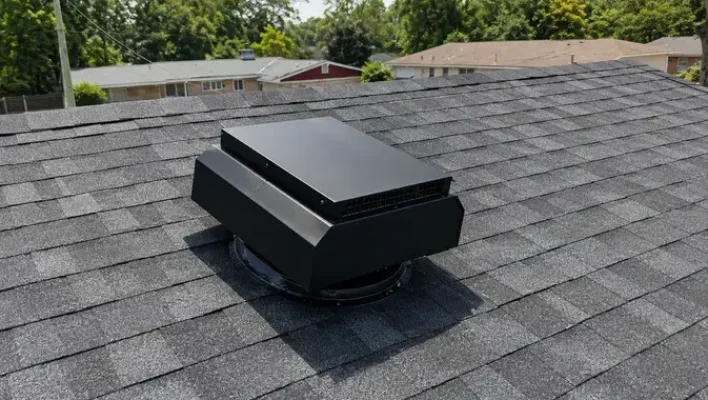
Our Roof Ventilation Services consider intake and exhaust as parts of a balanced system. Adding one vent without understanding the existing airflow may not solve the problem.
A professional Roof Vent Installation may involve ridge vents, soffit intake, or other suitable components based on the roof design.
Attic Roof Ventilation may help support:
Ventilation should be evaluated alongside insulation, roof design, existing openings, penetrations, and attic configuration.
Homes near the Gulf Coast, Galveston Bay, League City, Kemah, and other humid areas may experience different moisture and airflow conditions than properties farther inland. The solution should reflect the actual house, not a generic formula.
Roof Flashing protects vulnerable transitions where roofing materials meet walls, chimneys, penetrations, and other structural elements.
These areas experience concentrated water flow and movement. When flashing is damaged, loose, incorrectly layered, or poorly sealed, water may enter beneath the roofing surface.
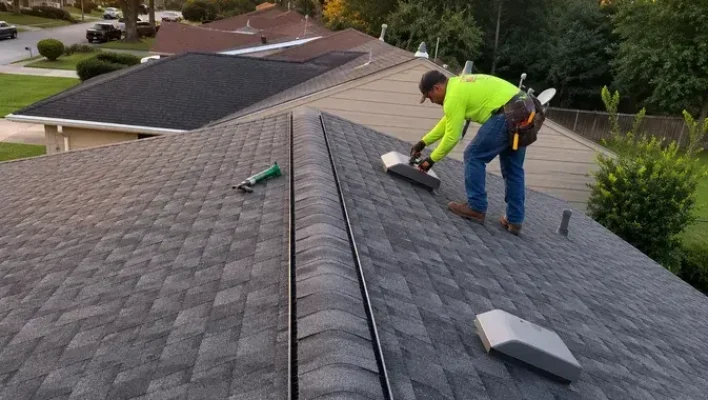
Professional Roof Flashing Repair may involve correcting the flashing detail, replacing damaged components, restoring surrounding materials, and ensuring water can move away from the transition.
Our Roof Flashing Services may address:
Chimney Flashing requires particular care because the roof and chimney meet at several angles. Water can collect behind the chimney or move into sidewall transitions when the flashing system is incomplete.
Flashing should not depend entirely on exposed sealant. Sealant can support certain details, but proper layering and compatible materials are essential.
Houston’s heavy rainfall and wind-driven rain can expose small flashing weaknesses quickly. Correct installation helps direct water over the roofing surface instead of beneath it.
Roof Valleys carry water from intersecting roof slopes. During heavy rainfall, these areas may handle a significant volume of runoff.
Because water is concentrated in a narrow path, valleys require careful material placement, underlayment, alignment, and flashing details.
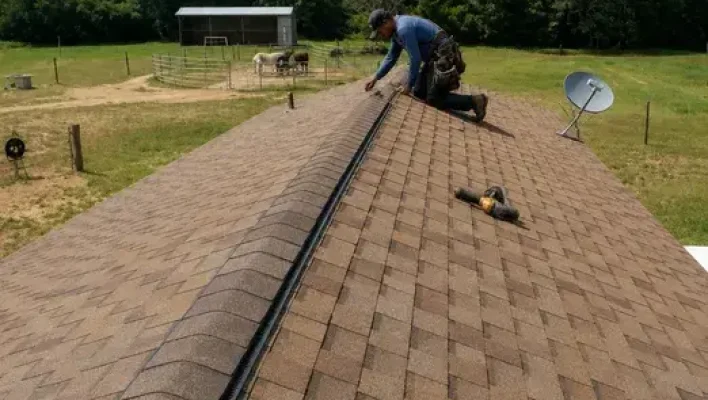
A Roof Valley Repair may be necessary when roofing materials become worn, displaced, cracked, poorly sealed, or damaged by debris.
Professional Roof Valley Installation depends on the roof design, roofing material, and selected valley method. The components must direct water downward without creating points where runoff can move beneath the roof covering.
Valley Flashing may be used as part of the water-management system. Its placement and integration with surrounding roofing materials are important.
Common valley concerns include:
Properties with trees or complex roof designs may need additional attention in these areas. Roof valleys should remain clear enough to move water efficiently during Houston’s intense rainfall.
Houston homes face a demanding combination of heat, moisture, rain, and wind.
Long periods of heat and ultraviolet exposure can affect roofing surfaces, sealants, and other exterior components. Attic temperature and ventilation can also influence conditions beneath the roof.
Houston’s humidity can make moisture control more challenging. Roof leaks, condensation concerns, blocked airflow, and damp attic materials should be addressed before they affect larger areas.
Water follows the smallest opening. Flashing, valleys, roof penetrations, edges, transitions, and low-slope areas need careful attention.
Homes near Downtown Houston, Buffalo Bayou, Baytown, La Porte, Galveston, and other areas that experience heavy rainfall should have roofing systems designed to shed water efficiently.
Wind can place pressure on shingles, panels, ridges, edges, and roof transitions. Correct fastening and installation details matter throughout the system.
We keep the Residential Roofing page focused on normal residential roofing needs. Homeowners seeking detailed information about weather-related roofing concerns should be directed to the dedicated Storm Damage Roofing page rather than repeating that complete service here.
Homes near Downtown Houston, Buffalo Bayou, Baytown, La Porte, Galveston, and other areas that experience heavy rainfall should have roofing systems designed to shed water efficiently.
A complete roofing system includes more than shingles or panels.
Key components may include:
Roof decking
Underlayment
Shingles or metal panels
Flashing
Valleys
Ventilation
Starter materials
Ridge details
Pipe boots
Fasteners
Sealants
Provides the structural surface beneath the roofing system
Adds a protective layer beneath the surface material
Form the visible weather-shedding surface
Protects transitions and penetrations
Direct water from intersecting roof slopes
Helps manage attic heat and moisture
Support edges and initial roofing courses
Protect and finish roof peaks
Seal around plumbing penetrations
Secure materials in approved locations
Support selected joints and details where appropriate
Each component must be compatible with the rest of the system. Replacing one visible item without reviewing nearby details may leave the original weakness in place.
We begin with the concern. This may be a leak, aging materials, visible damage, excessive attic heat, or uncertainty about the roof’s condition.
We inspect accessible components and document relevant observations.
Homeowners should understand what we found and why it matters. We explain the condition in direct language.
The recommendation may involve monitoring, maintenance, repair, installation, or replacement. We base it on the roof’s condition and the homeowner’s goals.
The written scope should identify the planned work, materials, important limitations, and project expectations.
Roofing components must be installed as a connected system. We focus on workmanship, compatible materials, fastening, transitions, and cleanup.
Final review and documentation help homeowners understand what was completed.
Houston Roofing & Improvements has also introduced construction-consultant documentation for qualifying roof installation projects. This may include project photographs and reporting related to installation quality, manufacturer requirements, applicable standards, and materials used.
Houston Roofing & Improvements has served Texas property owners since 2013. The company provides residential and commercial roofing services with owner involvement, experienced crews, clear communication, and a strong focus on workmanship.
Homeowners choose us because we provide:
A reliable Residential Roofing Contractor should explain the work instead of using pressure or vague promises.
As a local Residential Roofing Company, we understand that homeowners want to know whether the roof can be repaired, whether replacement is necessary, and what the recommended work will involve.
Our goal is to provide the level of clarity homeowners expect from experienced Residential Roofing Experts.
Houston Roofing & Improvements serves homeowners throughout Houston and surrounding Texas communities.
Our Houston Residential Roofing coverage includes:
We use location references naturally and do not create repetitive city sections that provide no added value. Homeowners in these communities can contact us to confirm service availability for their property.
The decision depends on the extent of damage, material condition, roof age, leak history, previous repairs, and whether the affected area can be corrected reliably. An inspection provides the clearest answer.
It may include accessible roofing materials, flashing, penetrations, valleys, ventilation, visible drainage concerns, signs of damage, and photo-supported findings where appropriate.
In some cases, yes. A repair may be practical when the damage is limited and the surrounding roof remains in serviceable condition.
Wind-driven rain may enter through flashing, valleys, penetrations, damaged materials, or transitions that do not leak during lighter rainfall.
There is no single schedule for every property. Roof age, material type, surrounding trees, previous work, visible concerns, and weather exposure all affect inspection needs.
They are closely connected. Roofing ventilation components support airflow through the attic space. The complete system may also depend on intake openings, insulation, attic configuration, and exhaust placement.
They are widely used, but product choice and installation quality matter. Underlayment, flashing, fastening, ventilation, and roof design all affect performance.
It can be a strong option for suitable roof designs. Homeowners should compare installation cost, panel type, appearance, maintenance, and long-term goals.
Valleys move concentrated water from intersecting roof slopes. Poor installation or wear in these areas can increase the risk of water entry.
Flashing may loosen, corrode, become damaged, separate from surrounding materials, or be installed incorrectly. Movement and previous repair work may also affect it.
Yes. The service area includes Houston and multiple surrounding communities, including Katy, Pearland, Sugar Land, League City, Spring, The Woodlands, Baytown, Galveston, Alvin, Kemah, Rosenberg, Angleton, La Porte, and Beaumont.
Your roof protects the structure, interior, insulation, belongings, and daily comfort of your home. Roofing decisions should be based on clear findings and practical recommendations.
Whether you need an inspection, targeted repair, leak correction, replacement, new installation, maintenance, asphalt shingles, metal roofing, ventilation work, flashing service, or valley work, Houston Roofing & Improvements can assess the condition and explain the next step.
For dependable Residential Roofing Houston TX property owners can understand and trust, contact Houston Roofing & Improvements to schedule an inspection or request an estimate.
Concerned about a leak, worn materials, ventilation, flashing, or the overall condition of your roof?
Contact Houston Roofing & Improvements today.